Strength is built outside
Do you know that moment when you look up from your screen and realize time has passed? Not knowing whether it was a matter of minutes or even hours. It happens to all of us, even to me. And the irony? I grew up in the mountains, surrounded by nature, spending most of my days outside. Yet, despite my love for the wilderness, I'm still trapped in this endless loop, yet here I am, still falling into the same loop.
How does this keep happening, and more importantly, how do we get out? My answer isn't about quitting screens or escaping to a cabin. It's about being active. Specifically, doing it outside. That is what pulls me back into my body, into focus, and (counterintuitively) into better work.
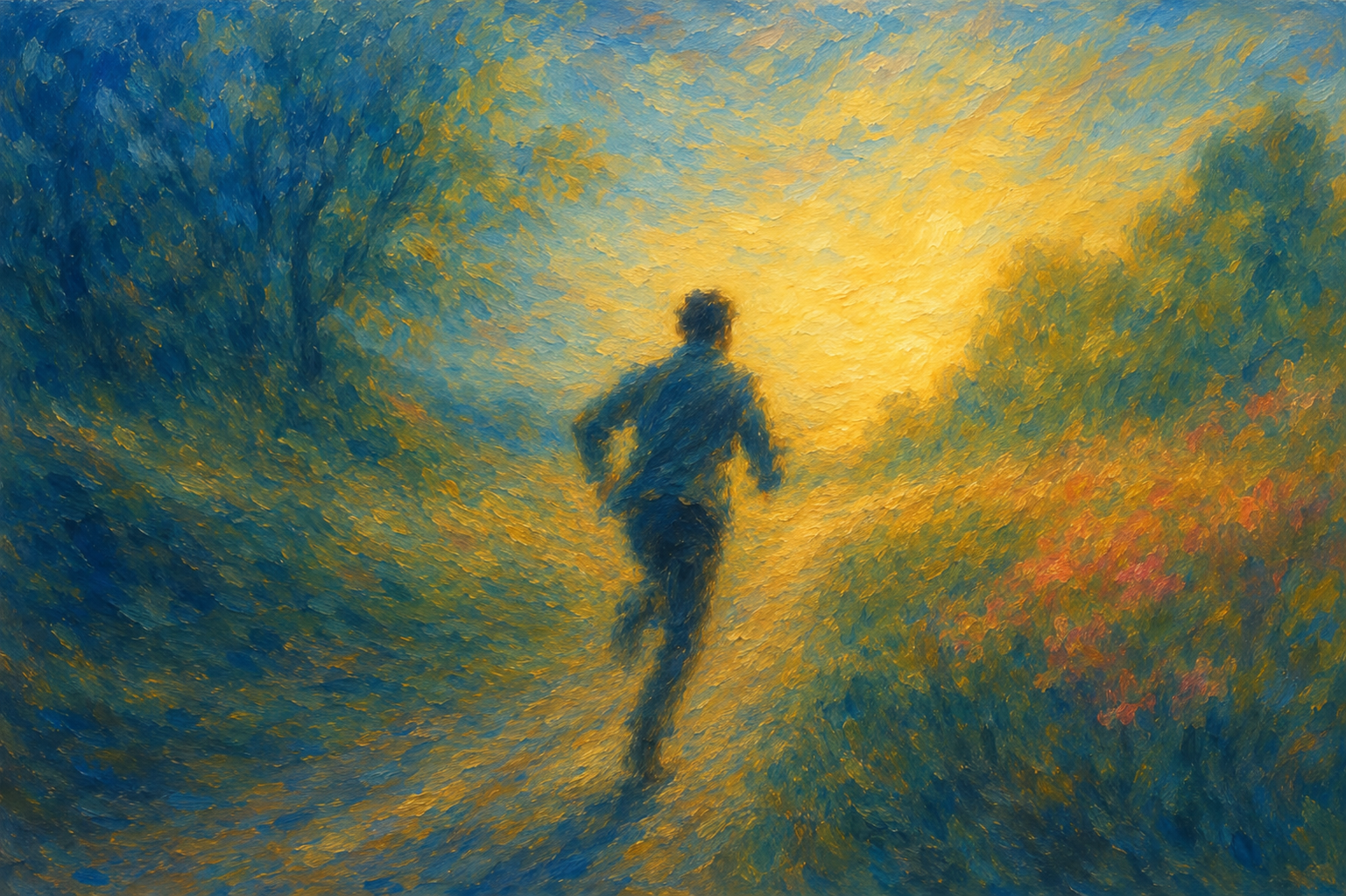
Sports as my default
I've been moving since I could walk. The Alps were my playground long before I touched a keyboard. Different disciplines came and went over the years. The default didn't. If I have a free day with nothing else competing, I'll spend it outside doing something that challenges me.
That default matters because it isn't a hobby I bolt on after work. It's the substrate everything else sits on. When I treat it that way, the rest of my life lines up. When I forget, things fall apart in ways I always recognize too late.
What it actually taught me
The disciplines change. The lessons don't. Hiking, climbing, skiing, biking, martial arts, parkour, skateboarding, calisthenics, cliff jumps, and more. Whatever the surface, they all came back to the same three things: mental strength, flow, and discipline.
Mental strength. My system floods. The loud voice says quit. The steady part says go. So I go. I learned the fear was survivable. Do that enough times, and it stops being about the thing that scared you. I just know I can handle whatever comes next.
Flow. The state where there's no room left for anywhere else. The section you can't back out of. The air between the edge and the water. The sparring round where the next ten seconds are the only ten seconds. Nothing waiting. Nothing remembered. Just here.
Sport gave me the reference before I had a word for it. When you're at your limit, nothing else exists. An hour collapses into what feels like ten minutes. The brain physically changes after enough of this — aerobic exercise increases hippocampal volume by about 2% and produces the same gains in focus and executive function as stimulant medication. I recognized the same shape the first time it appeared at a desk. The desk inherited it from outside.
Discipline. Not the motivational kind. The mechanical kind. The trail is wet. It's cold. The voice in my head runs through the options: stay in, go later, you'll make up for it tomorrow. I've heard this voice enough times to know it lies.
So I put on the shoes. Not because I feel like it. Because I said I would. Sport taught me to separate the decision from the mood. Every time I go anyway, the voice gets a little quieter. Every time I don't, it gets louder. The best work doesn't happen when inspiration arrives either. It happens on the days I sit down and write the first bad sentence just to get to the good one. Same mechanism. Different surface.
The loop I fall into anyway
Knowing all this doesn't make me immune to the trap. There are weeks where I'm heads down, building, and I notice on Friday that I haven't been outside since Sunday. The legs feel weird. The mind feels narrow. Sleep gets worse. Work output drops, but slowly enough that I tell myself I'm just pushing through a rough patch.
I'm not. The loop has closed. I stopped feeding the thing that lets me work in the first place.
Here's why it keeps happening even when you know better: I'm not just working one job. There's the day job, and then there's what I'm building on the side. Both feel urgent. Both feel meaningful. And both compete on the same terms as moving outside. The brain doesn't flag one as neglect and the other as input — it just registers that you're doing something that matters. So the trade-off stays invisible until the damage shows up. You're not lazy. You're not undisciplined. You chose the wrong stimulus, and it felt exactly right while you were doing it. The body keeps the score even when you aren't.
Health is infrastructure
Once I started taking movement seriously, the rest became harder to ignore. Sleep was affecting the runs. Food was affecting the climbs. My body was giving me feedback I hadn't asked for.
So I started treating health like infrastructure. Not a lifestyle project — just the boring inputs that keep everything else running. Sleep, food, recovery. Studies show regular exercise is as effective as antidepressants for mild to moderate depression. That's not soft. It's structural. And it compounds when the other inputs are dialed in.
I keep going because of how I show up when it's all working. For the work. For the people around me. For myself. The goal isn't aesthetic. It's simple: energy, a clear head, and a body that lets me keep doing this for decades.
Going outside is the cheapest productivity tool I know
The fix is not dramatic. A run before the standup. A walk in the evening. A weekend hike that takes you out of cell signal. The pattern is the same. You come back faster, sharper, more patient with the work, more decisive about what to cut. Stanford researchers found that walking boosts creative output by 81%.
If you treat sports and the outdoors as something you do when you have time, you'll never have time. Put them on the calendar before the work. The work gets better because of it, not in spite of it.
Pick one thing. Run, hike, climb — ideally something that challenges you. Do it often enough that not doing it feels wrong. That's how a default forms. Not by deciding. By repeating.
Takeaway
Your body is not a vehicle for your laptop. Sport outside is not a luxury and not an escape. It's the input that makes the rest possible. Build the default early, defend it weekly, and when you notice the loop closing, the move is the same as it always was. Go outside. Move hard. Come back.